
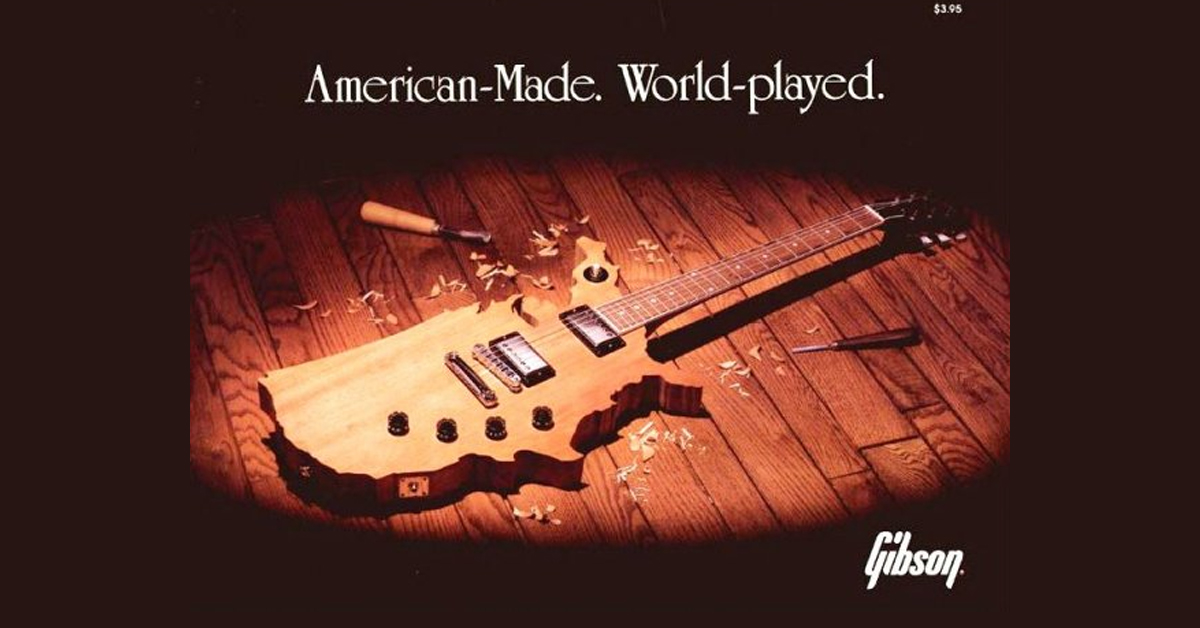
Some guitars become famous because of the musicians who play them. Others become legendary because they represent an entire era in guitar history.
One of the most recognizable examples is Gibson’s iconic USA Map Guitar, the unusual instrument that became the centerpiece of the company’s famous “American-Made, World-Played” advertising campaign during the early 1980s.
More than forty years later, the original prototype used in those historic advertisements has finally resurfaced. After years of searching, YouTuber and vintage guitar collector Austin (“The Trogly’s Guitar Show”) has tracked down the exact guitar that helped define one of Gibson’s most memorable marketing campaigns.
The Birth of Gibson’s “American-Made, World-Played” Campaign
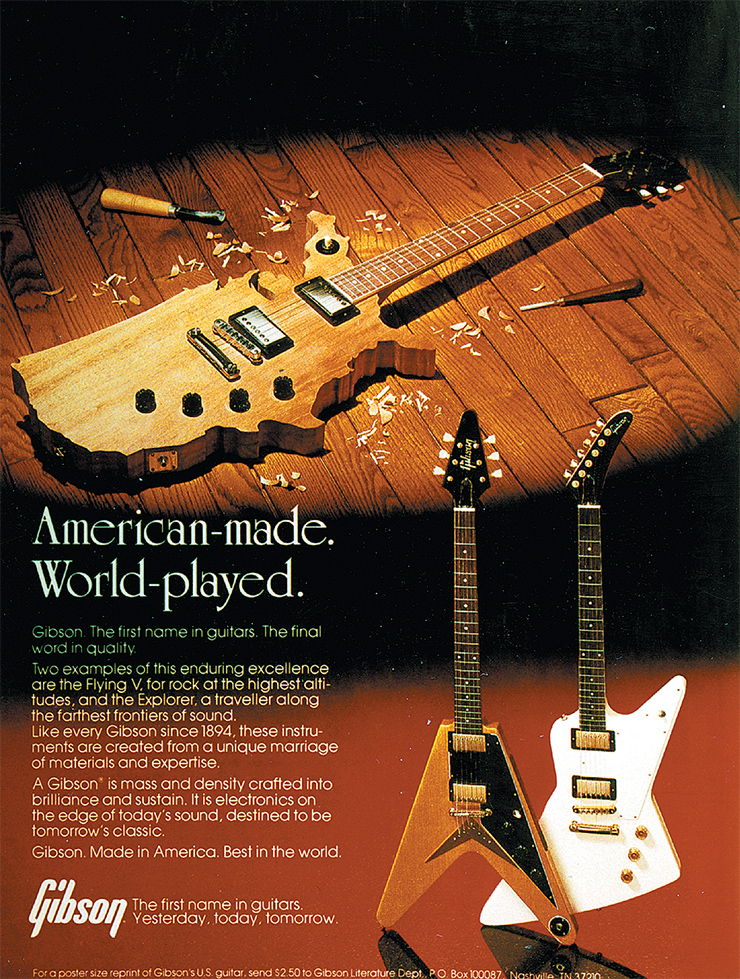
During the early 1980s, Gibson faced increasing competition from imported electric guitars, particularly from Asia. To remind musicians of its heritage and American craftsmanship, the company launched its now-famous “American-Made, World-Played” campaign.
At the heart of the campaign stood a remarkable instrument unlike anything Gibson had built before.
Designed in the shape of the continental United States, the USA Map Guitar immediately attracted attention. It appeared in Gibson catalogs, magazine advertisements, promotional posters, and dealer displays, becoming one of the company’s most recognizable promotional guitars.
Although Gibson later produced several versions under both the Gibson and Epiphone brands, the original prototype remained surrounded by mystery for decades.
Why the Prototype Was Unlike Every Other Map Guitar
To casual guitar fans, every Gibson Map Guitar looks almost identical. Collectors, however, have always known that the original promotional guitar featured several details that never appeared on most production models.
Among its unique characteristics were:
- A Tune-o-matic bridge with a stop tailpiece instead of the wraparound bridge.
- Body binding not found on many later versions.
- A pickup selector switch positioned near the “Maine” section of the guitar rather than closer to the controls.
- Several construction details that clearly separated it from every production example.
These subtle differences allowed experienced collectors to recognize the original guitar from period Gibson advertisements.
A Search That Lasted for Years
Austin, better known through The Trogly’s Guitar Show, had mentioned the prototype in several previous videos and investigated numerous false leads over the years.
Then an extraordinary coincidence changed everything. A viewer who worked at Carter Vintage Guitars in Nashville happened to watch one of Austin’s videos about the prototype just one day before the guitar arrived at the shop on consignment.
The moment Austin saw the instrument, he immediately recognized it.
“As soon as I saw it, I knew it was the one.”
Even the wood grain across the “Texas” section of the body matched the original promotional photographs. Sometimes vintage guitar collecting comes down to knowledge. Sometimes it comes down to luck. This discovery required both.
The Family of the Original Builder
Further research revealed another fascinating chapter in the guitar’s history.
The instrument came directly from the family of James Hutchins, the craftsman responsible for carving the original Map Guitars for Gibson during the early 1980s.
Before the guitar reached Carter Vintage Guitars, the family had taken it to Nashville Fretworks Guitar Repair & Restoration for restoration work. During that process, another surprising discovery came to light.
A Guitar That Was Never Finished
One of the biggest surprises involved the prototype itself. According to information uncovered during the restoration, the guitar used in Gibson’s famous advertising campaign had apparently never been completed as a fully functioning instrument during its time at the factory.
Instead, Gibson primarily built it as a promotional display piece for photography and marketing purposes.
Only in 2022, more than forty years after it first appeared in advertisements, did technicians complete the routing and wiring needed to make it fully playable.
That discovery also explained why some of the internal routing and solder work looked much newer than expected. Rather than reducing the guitar’s historical importance, the restoration added another fascinating chapter to its story.
More Than Just Another Vintage Guitar
Vintage guitars usually become valuable because legendary musicians played them. The Gibson USA Map Guitar became legendary for a different reason.
Millions of guitar players saw it in Gibson advertisements throughout the 1980s. It became a visual symbol of the company’s identity and one of the most recognizable promotional instruments Gibson has ever created.
Even people unfamiliar with vintage guitars often recognize the famous USA-shaped design. Very few promotional instruments have achieved that level of recognition.
A Legacy Piece Worth More Than Money
Austin has often spoken about his dream of opening a museum dedicated to historically significant guitars. For him, this instrument represents something that goes far beyond its market value.
“Even if you offered me a million dollars, this is one of those guitars that’s worth more than money. It’s the Map Guitar. It’s a legacy piece.”
Considering its place in Gibson’s history, many collectors would probably agree.
The original USA Map Guitar prototype represents far more than wood, electronics, and craftsmanship. It tells the story of a period when Gibson defended its identity through creativity, bold marketing, and American guitar building.
More than four decades later, the guitar continues to remind musicians why some instruments become much more than tools for making music. They become symbols of an entire generation.
Watch Austin’s complete video below to discover the remarkable journey behind one of the most iconic promotional guitars Gibson has ever created.


Facebook Comments