

In October 1978, Dire Straits were still at the beginning of their remarkable journey. Their debut album had only recently introduced the band to the world, while “Sultans of Swing” was quickly establishing Mark Knopfler as one of the most distinctive new guitarists of his generation.
On October 14, 1978, Dire Straits appeared on the French television program Chorus for a short but fascinating interview.
The conversation lasted only around two minutes, yet it offers a rare glimpse into Knopfler’s thoughts about guitar technique, blues influences, songwriting, and the band’s ambitions.
More than four decades later, the interview remains interesting because Knopfler was already describing many of the ideas that would become central to his legendary guitar style.
How Mark Knopfler Created the Dire Straits Guitar Sound
One of the first questions focused on the soft, rounded guitar sound that had already become associated with Dire Straits.
The interviewer asked Knopfler whether he achieved that sound by playing without a pick and using his hands and fingers.
Knopfler explained that he had used a pick in the past, but had also developed his fingerpicking technique. Rather than seeing the two approaches as completely separate, he described his playing as a kind of synthesis.
For Knopfler, the combination of plectrum playing and fingerpicking gradually evolved into its own technique.
He also made it clear that he enjoyed playing in different ways. His approach was not about following one strict method, but about allowing different influences and techniques to become part of his natural playing. This idea would become one of the defining characteristics of his sound.
Learning From the Blues Without Simply Copying
The interviewer then asked Knopfler about his influences and whether he had studied older blues guitarists.
Knopfler mentioned musicians such as Blind Willie McTell and Blind Blake, two important figures in early blues guitar. However, he explained that he never approached their music by sitting down with a record and deliberately trying to learn every note.
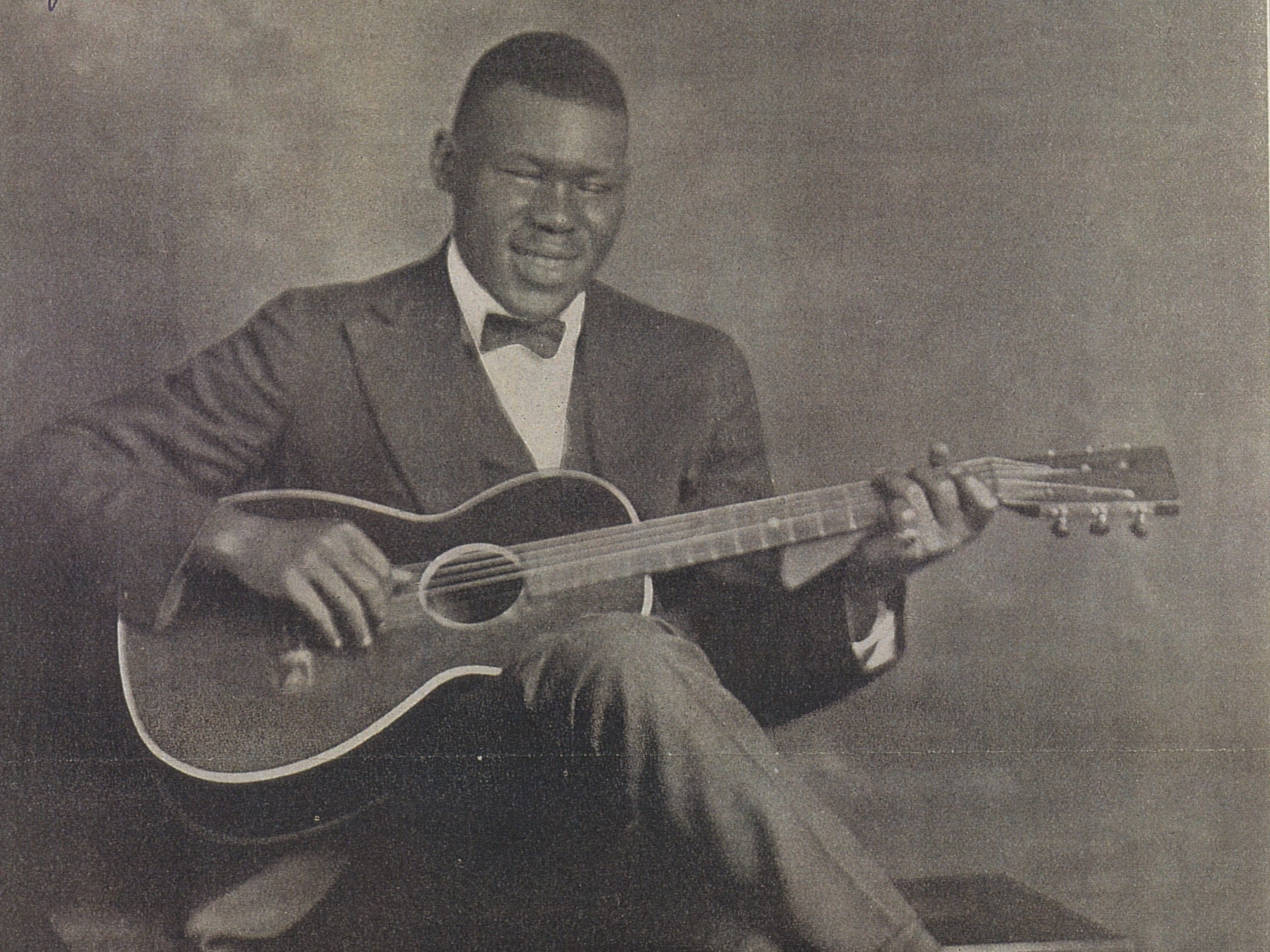
Instead, he absorbed the music naturally. Knopfler described his approach as listening, taking in different ideas, and allowing them to become part of his own musical vocabulary.
For him, this was not about copying another guitarist note for note. It was about naturally absorbing different styles and eventually creating something new from those influences.
That philosophy helps explain why Knopfler’s playing has always sounded so personal. His music contains traces of blues, country, folk, rock and other traditions, yet his guitar style remains immediately recognizable.
The Natural Evolution of Mark Knopfler’s Fingerstyle Technique
What makes this interview particularly fascinating is that Knopfler’s explanation sounds remarkably similar to how guitarists and musicians would describe his playing decades later.
His technique did not appear overnight. It developed gradually as he combined different ways of picking and experimented with the sounds he could produce from the guitar.
Instead of treating technique as an isolated exercise, Knopfler allowed it to grow alongside his songwriting. That approach eventually produced the distinctive fingerstyle sound heard on songs such as “Sultans of Swing,” “Down to the Waterline,” and “Lady Writer.”
The technique became so closely associated with Knopfler that it eventually became one of the most recognizable guitar sounds in rock music.
Dire Straits and the Dream of Traveling the World
The conversation then moved away from guitars and toward the future of Dire Straits. The interviewer asked whether the band planned to travel to America or remain primarily in Europe.
Knopfler’s answer was simple: “They liked to travel.”
At the time, Dire Straits were beginning to experience the international attention that would soon transform their lives. The band had already attracted audiences outside Britain, and the possibility of international touring was becoming a reality.
Knopfler admitted, however, that there was one part of international success he was less enthusiastic about: hotels.
He joked about not particularly enjoying the hotel lifestyle, even while appreciating the opportunity to travel, meet new people, and experience different places.
The final moments of the interview reveal another side of the young Dire Straits. The interviewer jokingly referred to the band as international “jet-setters.”
Knopfler played along with the idea, joking that the members had bought themselves brand-new dinner jackets.
Then came the punchline. He suggested that they were going to put the jackets in the laundry and asked whether the interviewer knew a good laundry nearby.
The answer was apparently just next door, although it was an automatic machine. It was a typically understated Mark Knopfler moment.
Even as Dire Straits were beginning to enter the world of international rock stardom, Knopfler’s sense of humour remained dry, relaxed, and completely unpretentious.
Dire Straits in 1978 – Before Worldwide Fame
The timing of this interview makes it particularly valuable. Dire Straits had released their self-titled debut album in October 1978, and the band was still far from the massive stadium act it would become only a few years later.
The original lineup featured:
- Mark Knopfler – vocals and guitar
- David Knopfler – guitar and backing vocals
- John Illsley – bass and backing vocals
- Pick Withers – drums
At this stage, Dire Straits were still developing their identity. Yet songs such as “Sultans of Swing” had already demonstrated that the band possessed something different.
Mark Knopfler’s understated vocals, sophisticated songwriting, and unusual guitar technique immediately separated Dire Straits from many of the louder and more aggressive rock acts of the period.
A Glimpse Into Mark Knopfler’s Musical Philosophy
Perhaps the most important part of the interview is not a particular guitar technique. It is Knopfler’s explanation of how he learned music.
He did not describe a rigid system of copying his heroes. Instead, he talked about listening, absorbing influences, experimenting, and allowing different musical ideas to become part of his own style.
That philosophy would remain visible throughout his career. Knopfler’s guitar playing has always sounded like a conversation between different musical traditions. Blues, country, folk, rock and early rhythm-and-blues influences all appear in his work, but they never completely define it.
He took those influences and turned them into something distinctly his own.
Watch the Rare 1978 Dire Straits Interview
The original Chorus interview lasts only around two minutes, but it captures Dire Straits at a fascinating moment.
Mark Knopfler was still a relatively new name to international audiences. His guitar style was still evolving, and the band was only beginning to discover what the future might bring.
The interview also shows the personality behind the music: thoughtful when discussing guitar, respectful toward his blues influences, excited about traveling, and quietly funny when talking about the realities of life as a touring musician.
The footage was licensed from INA (Institut national de l’audiovisuel).
Watch the complete interview and enjoy this rare glimpse of Mark Knopfler and Dire Straits in 1978, just as their extraordinary story was beginning.


Facebook Comments