
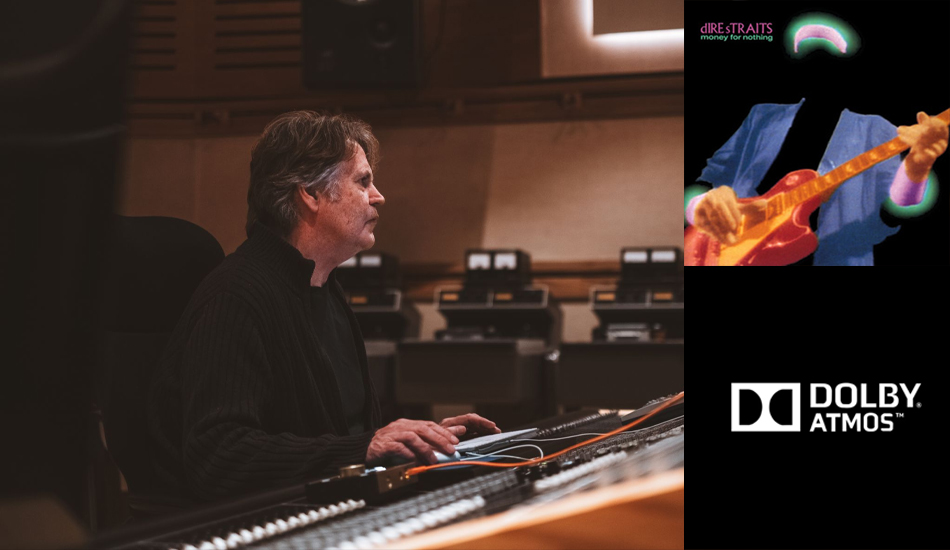
Music can change when we hear it from a different perspective!
For Guy Fletcher, longtime Dire Straits keyboard player, musician, producer, and engineer, Dolby Atmos has opened a completely new way of listening to recordings that have been part of his life for decades.
In a recent reflection published on his official website, Fletcher explains why immersive audio can reveal tiny details, forgotten textures, and emotional moments that sometimes disappear inside a traditional stereo mix.
His experience with Dolby Atmos has also taken him back to some of the most important recordings in the Dire Straits catalogue, including Money for Nothing, Brothers in Arms, and On Every Street.
What Is Dolby Atmos Music?
Dolby Atmos is an immersive audio format that allows sound to be positioned around the listener rather than being restricted to a traditional left-and-right stereo image.
Instead of thinking only about two speakers, engineers can create a three-dimensional sound environment with a greater sense of space, depth, and movement.
For music producers, this creates a much larger creative canvas. Instruments and other elements can occupy different positions within the sound field, allowing listeners to experience recordings in a more spacious and detailed way.
However, Guy Fletcher points out that the real value of Atmos is not simply making music sound bigger. It is about revealing things that were already there.
Fletcher recalls one particularly emotional experience. He had just completed a Dolby Atmos mix and played it to the singer of the band he was producing. It was the singer’s first experience with the format.
After listening for a short time, Fletcher noticed that the singer had tears in his eyes. When the song finished, the singer described the experience as being similar to hearing every monitor mix he had ever made of that song.
Fletcher immediately understood what he meant. The immersive mix had somehow brought back tiny details and musical decisions that had become less noticeable in the final stereo version.
For Fletcher, it was like cleaning out an old drawer and suddenly finding things you did not realize you had lost.
That idea became central to his understanding of Atmos: the technology does not necessarily change the music. Instead, it can liberate details that were already inside the recording.
Why Atmos Can Make Music Feel More Alive
One of the first things Fletcher notices when working in immersive audio is space. When sounds are placed around the listener, the recording can suddenly feel as if it has room to breathe.
Instead of everything existing along a flat line between two speakers, instruments can occupy a larger three-dimensional environment.
This can create a stronger sense of depth, height, distance, and atmosphere. For an engineer, that freedom can become highly addictive because the possibilities for experimentation are much greater.
At the same time, Fletcher does not dismiss stereo. He describes stereo as an extraordinarily effective format because of its simplicity, immediacy, and accessibility. Stereo remains the easiest way to deliver music to the largest possible audience.
The challenge is therefore not about deciding whether stereo or Atmos is “better.” It is about understanding what each format can achieve.
The Biggest Problem With Immersive Music
There is an interesting contradiction at the heart of Dolby Atmos. The format is now widely available, but relatively few listeners experience it through the kind of dedicated multi-speaker system used during the mixing process.
Most people hear Atmos through headphones, soundbars, televisions, or virtualized playback systems.
These formats can still provide some of the benefits of immersive audio, but they cannot always reproduce the full three-dimensional experience of a dedicated Atmos speaker system.
For Fletcher, this remains one of the biggest challenges facing immersive music.
Creating an impressive Atmos mix is no longer the main problem. The bigger question is how to make sure ordinary listeners experience the space, scale, and emotional impact that the engineer created in the studio.
Guy Fletcher’s First Dolby Atmos Project: Dire Straits
Fletcher’s first major experience mixing in Dolby Atmos was a particularly demanding project: Dire Straits’ Money for Nothing compilation.
The compilation, released in 1988, brought together songs from the band’s first five albums. That created a unique problem.
Unlike mixing a single album, where the recording techniques and production style are usually consistent, Money for Nothing contained songs created in very different studios, with different engineers, recording equipment, effects, tape machines, and production approaches.
Fletcher therefore had to treat every song almost as a separate project. Each recording came with its own technical limitations and possibilities.
A Detective Story Hidden Inside the Tapes
Some of the Dire Straits multitracks were incomplete.
Other elements were missing or buried inside decades-old tape archives. As Fletcher worked through the material, the project sometimes felt less like conventional mixing and more like detective work.
He jokingly compared himself to Hercule Poirot (Agatha Christie’s fictional character), searching for clues and following trails through the band’s recording history. But this difficult process also created an unexpected reward.
While trying to reconstruct the recordings, Fletcher discovered performances, textures, and details that had been hidden for years beneath the limitations of the original stereo presentation.
The technical problems became part of the creative adventure.
Then Came “Brothers in Arms”
After Money for Nothing, the next major challenge was even more significant. Fletcher was asked to work on Dire Straits’ Brothers in Arms in Dolby Atmos.
For him, this was particularly personal because Brothers in Arms had been his first project with the band. The original recordings immediately brought back memories of AIR Studios Montserrat, where Dire Straits recorded the album in 1984.
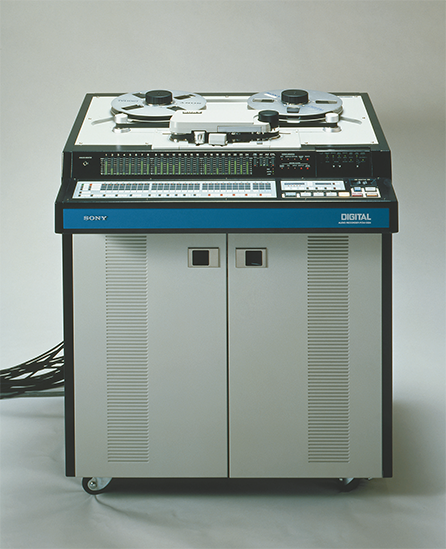
The album was recorded using Sony’s pioneering 3324 digital tape machine, technology that was extremely advanced for its time. Even by modern standards, Fletcher was impressed by the quality of the original recordings.
He also praised the work of engineer Neil Dorfsman, whose recording and production decisions helped create the sound that would eventually become one of the most successful albums in music history.
The Challenge Was Not Technical – It Was Emotional
Working on Brothers in Arms in Dolby Atmos was not simply an exercise in improving sound quality. The album had become deeply connected with millions of listeners.
For decades, people had grown up with songs such as “Money for Nothing,” “Walk of Life,” “Brothers in Arms,” and “So Far Away.”
Changing the way those songs were presented therefore required enormous care. Fletcher understood that the album no longer belonged only to the musicians and engineers who created it. It belonged to the listeners too.
When fans later heard the Atmos version and became emotional, Fletcher realized that the project had achieved its real purpose.
Rediscovering “On Every Street” With Mark Knopfler
More recently, Fletcher completed Dolby Atmos mixes for Dire Straits’ On Every Street, the band’s final studio album.
The album was originally recorded in 1992, by which time digital recording technology had advanced again.
The sessions used Sony’s 3348 one-inch digital tape machine, which represented a significant step forward from the earlier 3324 system used during Brothers in Arms.
But once again, the technology was only part of the story. Fletcher recently sat down with Mark Knopfler to listen to and approve the completed Atmos mixes.
Mark Knopfler Hears “On Every Street” in Atmos
The listening session became much more meaningful than a simple technical approval. As the songs unfolded around them, Knopfler was able to hear the album in a completely different spatial environment.
Fletcher believes that Mark had probably not listened to the entire album from beginning to end for many years.
The Atmos experience therefore became a kind of musical time machine. The new presentation brought back memories of the work, the recording sessions, the musicians, and the enormous effort that went into creating the album.
Remembering Jeff Porcaro on “Calling Elvis”
One particularly powerful part of the experience was revisiting the musicianship on On Every Street.
Fletcher specifically highlights the extraordinary drumming of Jeff Porcaro, whose performance on the opening track “Calling Elvis” remains one of the album’s most memorable musical moments.
Hearing those performances again in an immersive environment allowed the musicianship to feel fresh. It was not simply a new mix. It was a new way of remembering the original recording.
Atmos Is About Rediscovery, Not Just Technology
This may be the most interesting idea in Fletcher’s entire reflection. Dolby Atmos is often discussed as a technological development, but Fletcher sees something deeper in it.
Immersive audio can reveal details that listeners may have forgotten. It can change the relationship between the listener and a familiar recording. And sometimes, it can bring back memories that have been connected to a song for decades.
In that sense, spatial audio is not only about hearing music differently. It is about rediscovering music you thought you already knew.
A New Way to Hear the Dire Straits Legacy
Guy Fletcher’s work on Money for Nothing, Brothers in Arms, and On Every Street demonstrates how the history of Dire Straits can continue to evolve without changing the music itself.
The original recordings remain the foundation. The new Atmos mixes simply offer another perspective — one that can expose small details, create new space, and allow longtime listeners to experience familiar songs with fresh ears.
For Dire Straits fans, this makes Dolby Atmos particularly fascinating. These are not new recordings. They are pieces of musical history being carefully opened again.
And perhaps that is the real beauty of Atmos. Sometimes the best way to hear the past is to give it a new space in which to breathe.
Sources: www.sony.co.jp ; www.guyfletcher.com


Facebook Comments