

For Joe Bonamassa, a great vintage guitar is never just an expensive instrument. Every old Gibson Les Paul has a history.
Some have survived decades of touring, others have unusual modifications, and a few carry stories that sound almost impossible to believe. That is exactly what makes Bonamassa’s collection so fascinating.
In a new compilation from Gibson TV’s The Collection, originally centered on Bonamassa’s Nerdville East collection, Mark Agnesi visits the legendary blues guitarist and explores five of his favorite vintage Les Pauls.
The compilation was published on July 14, 2026, runs for approximately 19 minutes. This episode focuses on five remarkable instruments. Guitars named as: “Lazarus,” “Johnny B,” “Ragin’ Cajun,” “Lorelei,” and a 1958 Les Paul Custom “Black Beauty”.
What makes the episode special is not simply the age or rarity of the guitars. It is the stories behind them.
Joe Bonamassa and the Art of Collecting Vintage Les Pauls
Joe Bonamassa has spent decades building one of the most impressive private guitar collections in the world. His Nashville home, known as Nerdville East, contains rare guitars, amplifiers, memorabilia, and instruments. All those are connected with some of the greatest periods in electric-guitar history.
Bonamassa approaches collecting differently from someone who simply wants the most expensive instruments. He looks for character.
A guitar with repaired damage, faded paint, a player’s name, unusual pickups, or evidence of years on the road can be more interesting to him than a perfectly preserved example. The five Les Pauls featured here demonstrate exactly why.
1. “Lazarus” – The 1959 Les Paul That Came Back to Life
The first guitar is the star of the entire collection: a 1959 Gibson Les Paul Standard known as “Lazarus.”
Bonamassa discovered the guitar during a gathering at Barone’s Italian restaurant in Sherman Oaks, California.
What he saw initially looked far from a legendary Burst. The guitar had been painted candy-apple red, its hardware had been removed, and many of the original components were sitting separately at a repair shop.
The story became much more interesting when Bonamassa started looking beneath the red finish. Important original details remained hidden underneath the paint, including the neck area, pickup cavity, center seam, and other construction clues.
The original pots and harness were also still with the guitar, and the potentiometer codes ultimately pointed toward the seventh week of 1959. That evidence convinced Bonamassa that he was looking at a genuine 1959 Les Paul Standard.
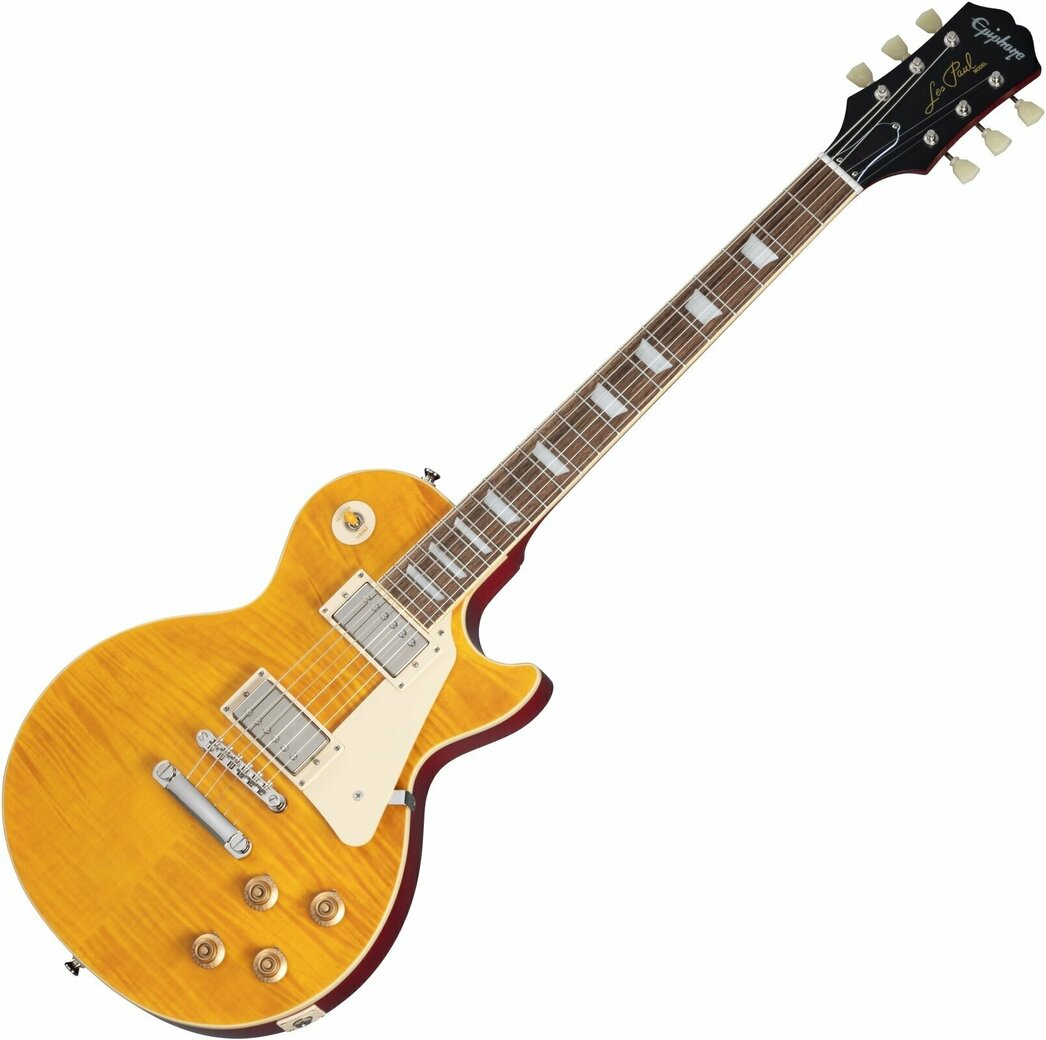
The restoration revealed the original sunburst finish and the beautiful figured maple top hidden underneath more than five decades of red paint.
Bonamassa named the guitar “Lazarus” because, in his words, it had effectively come back from the dead. Gibson later used the instrument as the inspiration for an Epiphone signature model.
2. “Johnny B” – A Road-Worn 1960 Les Paul With a Name
Next comes “Johnny B,” a late-1960 Gibson Les Paul Standard. For Bonamassa, one of the guitar’s best details is not its serial number or finish. It is the name written on the body.
He has a particular affection for guitars that carry the names of previous owners. To him, those marks represent an early form of personal branding. That is also evidence that the instrument belonged to someone before it became part of a famous collection.
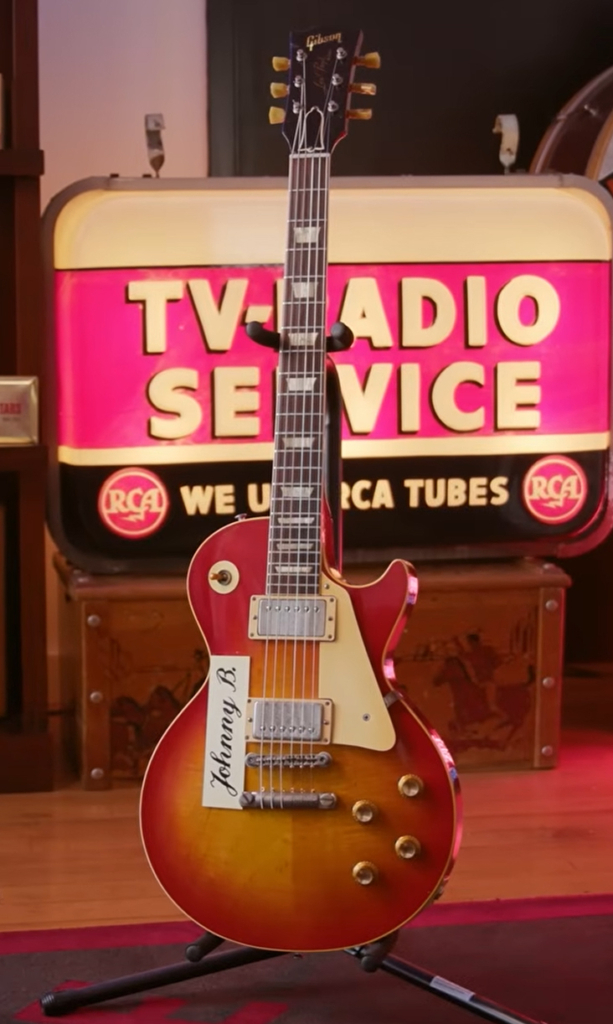
“Johnny B” has retained much of its original character, including its original frets and components. Bonamassa also loves its slimmer 1960 neck profile and the brighter, more aggressive response he associates with many guitars from that year.
Most importantly, this is not a museum piece that rarely leaves the room.
Bonamassa has used “Johnny B” on the road and describes it as an exceptionally dependable touring guitar. That history of real-world use is exactly what he values.
3. “Ragin’ Cajun” – The 1960 Burst Found in New Orleans
The third guitar, “Ragin’ Cajun,” is another 1960 Gibson Les Paul Standard, and its story begins in New Orleans.
Bonamassa found the guitar at International Vintage while he was in the city performing. After deciding to buy it, he and his friend Mike Hickey discovered an old guitar book. That book contained a photograph of the exact same instrument.
That discovery changed everything. The guitar had been fitted with chrome pickup covers. But, once the covers were removed, Bonamassa found the original double-white PAF pickups underneath.
The discovery confirmed just how special the instrument was. Bonamassa says he subsequently used “Ragin’ Cajun” at practically every show for around three years. That is roughly 300 performances.
That makes it one of the clearest examples of a vintage guitar being used as a working instrument. Much better, rather than being treated purely as a collectible.
4. “Lorelei” – A 1959 Les Paul With Serious Rock History
The fourth instrument is another 1959 Gibson Les Paul Standard, known as “Lorelei.”
This guitar has a particularly strong rock pedigree because it was previously owned by Craig Chaquico. Craig was guitarist associated with Jefferson Starship. Bonamassa describes it as a genuine road-worn instrument with a history that stretches back to the classic-rock era.
The guitar also has an unusual visual character. Its original sunburst finish has faded significantly, making it appear almost like a gold-top from certain angles. However, Bonamassa notes that the original sunburst remains visible underneath the hardware in areas where the finish was protected from light.
Another standout feature is its unusual pickup combination, including zebra and double-white bobbins.
Bonamassa also discusses why these original pickup variations are so fascinating to collectors. Gibson did not necessarily build them with future collectors in mind — the details simply became important decades later when players began examining every part of these legendary guitars.
5. The 1958 Gibson Les Paul Custom Black Beauty
The final guitar takes the collection in a slightly different direction.
This is a 1958 Gibson Les Paul Custom, better known as a Black Beauty, and it became the basis for one of Bonamassa’s Epiphone signature models.
Unlike some of the pristine vintage guitars collectors might keep behind glass, Bonamassa deliberately wanted this instrument to become a highly playable guitar.
The original neck had been heavily worn, so it was refinished to improve its feel. The guitar also required a refret, while Bonamassa had the magnet in one of the PAF pickups flipped to correct the unusual original wiring configuration.
The changes transformed it into a much more comfortable and versatile instrument.
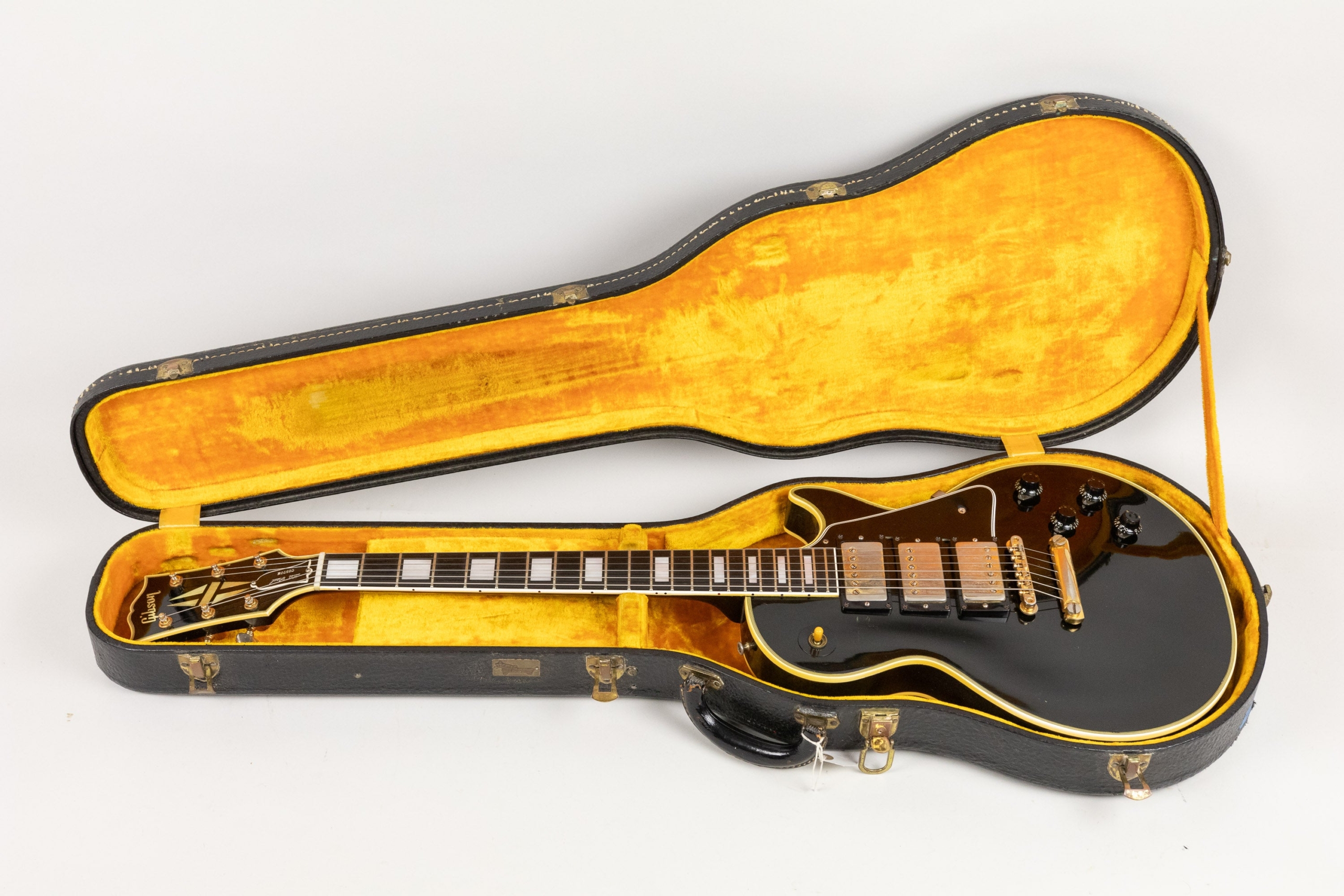
Bonamassa describes the result as having a clean but powerful neck pickup and a lead pickup that really “barks.” But the most unusual detail is found at the headstock.
The guitar carries Epiphone tuners with altered logos, a strange historical detail that might look wrong to someone reading a textbook about vintage Gibson specifications.
For Bonamassa, however, that is exactly what makes it interesting.
Why Joe Bonamassa Loves Guitars With History
One of the strongest themes in this Gibson TV feature is Bonamassa’s attitude toward vintage instruments. He is not simply chasing originality. He is interested in history.
A refinished Les Paul can be more fascinating because the original finish is still hiding underneath. A guitar with a former owner’s name can tell a story that a mint example cannot. A modified instrument can reveal how musicians actually used it.
That is why Bonamassa refers to these guitars as “road dogs.” They are instruments that have lived.
They have been played, repaired, modified, taken on stage, and passed between musicians. Their imperfections are not necessarily weaknesses. They are evidence of their history.
What Makes a Vintage Les Paul Special?
For collectors, a vintage Les Paul is about much more than its age. Details such as the original finish, serial number, pickup configuration, potentiometer codes, neck profile, hardware, and provenance can dramatically change the historical importance of an instrument.
But Bonamassa’s collection shows another side of vintage guitar collecting. Sometimes the best stories begin with a guitar that looks completely wrong.
A red-painted Les Paul turns into a genuine 1959 Sunburst. A forgotten instrument in New Orleans turns out to have its original double-white PAFs. A guitar with a name written on it becomes a trusted touring companion.
Those discoveries are what make guitar history so addictive.
Watch Joe Bonamassa Explore His Favorite Les Pauls
The Gibson TV compilation offers a fascinating introduction to five of the most important Les Pauls in Bonamassa’s collection.
From “Lazarus” and “Johnny B” to “Ragin’ Cajun,” “Lorelei,” and the 1958 Black Beauty, every instrument has a personality of its own.
For fans of Gibson guitars, vintage Les Pauls, blues, rock history, and the stories behind legendary instruments, this is one of those guitar videos that deserves to be watched all the way through.
Sometimes the most valuable part of a guitar is not its price. It is the story it has managed to survive.


Facebook Comments