

Few acoustic guitars have played such an important role in the history of popular music as Gibson flat-top guitars. For an entire century, these instruments have accompanied blues musicians, country performers, folk singers, rock stars, and generations of singer-songwriters.
In 2026, Gibson is celebrating 100 years of flat-top acoustic guitar history with a special series of videos exploring the instruments, body shapes, musicians, and craftsmen behind this remarkable story.
The first two chapters of the celebration, released by Gibson TV in July 2026, offer a fascinating introduction to how Gibson’s acoustic guitars evolved from their early designs in Kalamazoo, Michigan, into some of the most recognizable instruments in music history.
A Century of Gibson Acoustic Guitar Innovation
The story begins in 1926, when Gibson introduced its redesigned L-1 flat-top acoustic guitar. The instrument represented an important change in guitar design and helped establish the foundation for Gibson’s future acoustic lineup.

The L-1 also became associated with legendary blues musician Robert Johnson, helping demonstrate the potential of Gibson’s new flat-top concept.
During the 1930s, Gibson continued developing its acoustic range. Models such as the L-00 became closely associated with blues and folk musicians, while the impressive SJ-200 introduced a larger body design that offered greater volume and projection.
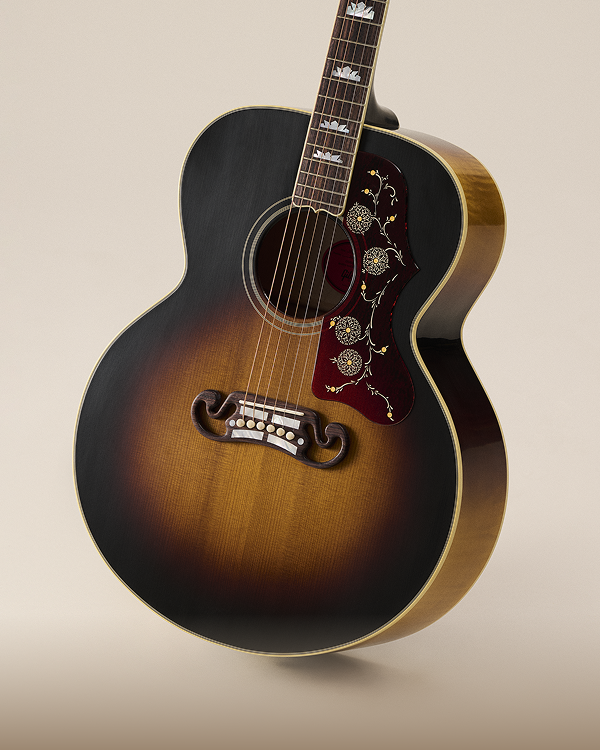
These guitars were built for musicians who needed instruments capable of filling a room without amplification.
The 1940s brought another defining moment with the introduction of the J-45. Often regarded as one of Gibson’s most important acoustic designs, the J-45 became a dependable instrument for countless musicians.
Its balanced tone, strong midrange, and comfortable design helped it become a favorite among singer-songwriters and performers across generations.
Then came the Hummingbird in the 1960s. With its distinctive square-shoulder design and instantly recognizable appearance, the Hummingbird became one of Gibson’s most famous acoustic guitars.
Its influence spread through folk, country, rock, and popular music, establishing another important chapter in Gibson’s acoustic history.
The Evolution of Gibson Flat-Top Body Shapes
The second Gibson TV chapter focuses on one of the most interesting parts of acoustic guitar design: body shape. Gibson’s acoustic history includes several body styles that have become standards in the guitar world.
The smaller-bodied designs offered an intimate response that suited fingerstyle players, blues musicians, and storytellers. Their spruce and mahogany construction helped create the warm and focused sound associated with early Gibson acoustics.
The development of the slope-shoulder jumbo in the 1930s represented another major step forward. This design eventually helped establish the J-45 as one of Gibson’s most recognizable acoustic guitars.
Larger instruments followed. The Super Jumbo, introduced in 1938, pushed acoustic guitar design toward greater projection and a more commanding tonal character.
By the middle of the century, Gibson continued refining the formula, including the use of figured maple backs and sides on some models.
The next major change arrived in 1960, when Gibson introduced the square-shoulder dreadnought design. Models such as the Hummingbird and later Dove became important parts of the Gibson acoustic family and eventually found their way into countless recordings and performances.
Each body shape offered musicians something different. Some were ideal for delicate fingerstyle playing. Others delivered the volume and projection needed to support an entire band. Together, these designs created the foundation of the Gibson flat-top family.
From Kalamazoo to Bozeman
While the early Gibson acoustics were built in Kalamazoo, Michigan, today’s Gibson acoustic guitars are handcrafted in Bozeman, Montana.
The modern Gibson acoustic workshop combines traditional guitar-making techniques with contemporary technology. Skilled craftspeople work carefully with the wood, construction, finishing, and setup of each instrument.
This connection between old and new is one of the most interesting elements of Gibson’s 100-year celebration.
The company continues to recreate historic models for players who want the sound and character of classic instruments, while also developing modern designs for today’s musicians.
The result is a guitar-making tradition that respects the past without being limited by it.
A Guitar Legacy That Continues Into the Future
The first two Gibson TV videos make it clear that the history of Gibson flat-top guitars is about much more than individual models. It is a story about how guitar design changed alongside music itself.
Blues musicians needed expressive instruments. Country performers needed projection. Folk artists needed warm and intimate voices. Rock musicians eventually demanded guitars capable of competing with increasingly powerful bands.
Gibson’s flat-top designs evolved with all of them. From the early L-1 and L-00 to the J-45, SJ-200, Hummingbird, Dove, and modern Gibson acoustics, each generation has added another chapter to the story.
Gibson’s 100 Years of Flat-Tops celebration is therefore more than a look back at old guitars. It is a reminder that these instruments remain part of the creative process.
A century after Gibson began developing its flat-top acoustic tradition, the guitars are still being built, played, recorded, collected, and passed from one generation of musicians to another.
Watch Gibson TV’s 100 Years of Flat-Tops
Gibson TV’s first two chapters are a great introduction to this remarkable history.
Chapter One: A Century of Sound explores the musicians, instruments, and developments that shaped Gibson’s acoustic legacy.
Chapter Two: Iconic Body Shapes focuses on the evolution of Gibson’s most important acoustic guitar designs and explains why their shapes became so influential.
For guitar lovers, these short films are an excellent way to discover how Gibson’s acoustic tradition developed—and why its flat-top guitars remain some of the most influential instruments ever made.


Facebook Comments