
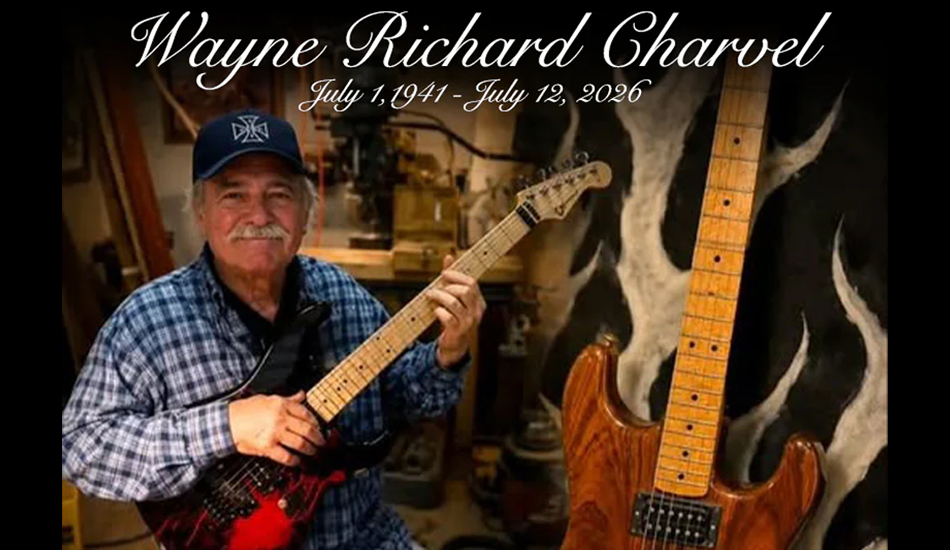
The history of the electric guitar is filled with legendary players, iconic instruments, and innovative builders. Wayne Charvel was one of the people who helped change the way musicians thought about their guitars.
The legendary luthier and guitar builder died on July 12, 2026, at the age of 85. His influence can still be seen in the Superstrat guitar design, the custom guitar revolution, and some of the most famous instruments associated with rock history.
The Beginning of the Charvel Guitar Revolution
Wayne Charvel opened Charvel’s Guitar Repair in Azusa, California, in 1974. His business initially focused on repairs, modifications, and replacement parts, but his reputation quickly grew among professional musicians.
At a time when major manufacturers did not always offer extensive custom work, Charvel gave players another option. Guitarists could modify their instruments, upgrade components, and create guitars specifically suited to their playing style.
This philosophy helped establish the idea that a guitar could be more than a finished product from a factory. It could become a personalized performance instrument.
Wayne Charvel and Eddie Van Halen
One of Charvel’s most important early customers was Eddie Van Halen.
Eddie regularly visited the shop while his guitars were being repaired or modified. His constant experimentation with pickups, bodies, necks, and hardware made him the perfect customer for a builder like Charvel.
Their relationship eventually produced one of the most famous guitars in rock history.
Eddie once asked Wayne if he had an extra guitar body and neck. Charvel provided the parts, and Eddie transformed them into an instrument that matched his own playing style.
He painted it white with black stripes and installed the pickup in an unconventional way. The guitar became known as Frankenstein.
Frankenstein and the Birth of a New Guitar Philosophy
Frankenstein represented something bigger than an unusual guitar.
Eddie Van Halen showed that musicians could combine different parts, modify existing instruments, and create something completely personal. The guitar became a symbol of experimentation and helped inspire countless players to build instruments around their own needs.
Wayne Charvel’s work was an important part of that culture. His shop demonstrated that guitarists did not have to accept traditional specifications. They could experiment with electronics, hardware, necks, bridges, and body designs to achieve the sound and performance they wanted.
The Rise of the Superstrat
By the beginning of the 1980s, rock guitar was changing rapidly.
Players demanded faster necks, powerful pickups, improved tremolo systems, and instruments capable of handling increasingly technical styles. Charvel’s approach to guitar building was perfectly suited to this new era.
The company became closely associated with what would later be known as the Superstrat — a high-performance guitar inspired by the familiar Stratocaster shape but equipped with modern features designed for speed and versatility.
The Superstrat became one of the defining instruments of the 1980s shred movement.
The Guitarists Who Made Charvel Famous
Charvel guitars soon found their way into the hands of some of the biggest guitarists of the era.
Among the musicians associated with the brand were Steve Vai, Jake E. Lee, Warren DeMartini, and George Lynch. Outside the metal world, legendary players such as Jeff Beck and Allan Holdsworth also became associated with Charvel instruments.
At Eddie Van Halen’s request, Wayne Charvel also built the original Bumblebee guitar, another iconic instrument from Eddie’s career.
These guitars demonstrated how closely instrument design had become connected with the identity and playing style of individual musicians.
Grover Jackson Takes the Brand Forward
Wayne Charvel’s involvement with his namesake company did not last forever.
In 1978, his interest in the company was bought out by Grover Jackson, who helped expand the brand and bring Charvel guitars to a much wider audience.
Although Wayne was no longer running the company, his original philosophy remained at the heart of the instruments: performance, customization, quality, and innovation.
The brand became deeply connected with the rise of shred guitar and the high-performance instruments that defined the era.
A Legacy That Continues Today
The guitar industry changed considerably after the 1980s. Changing musical trends and production issues affected Charvel’s reputation, but the brand eventually returned to prominence.
In 2002, Fender acquired Charvel, helping restore the company’s connection with its historic identity.
Today, Charvel guitars continue to be associated with speed, precision, and high-performance playing. Modern guitarists including Guthrie Govan, Angel Vivaldi, Rick Graham, Sean Long, and Jim Root have carried the tradition into a new generation.
Remembering Wayne Charvel
Wayne Charvel’s greatest achievement was not simply creating a successful guitar brand. He helped change the relationship between guitarists and their instruments.
He understood that musicians wanted to experiment, improve performance, and build guitars around their own individual styles. That philosophy helped spark the custom guitar revolution and influenced generations of builders and players.
His story is also permanently connected with some of rock’s most famous instruments, particularly Eddie Van Halen’s Frankenstein and Bumblebee guitars.
From a small repair shop in California to the biggest stages in the world, Wayne Charvel helped give guitarists the freedom to experiment.
His guitars and ideas will continue to influence the world of electric guitar for generations to come.


Facebook Comments