
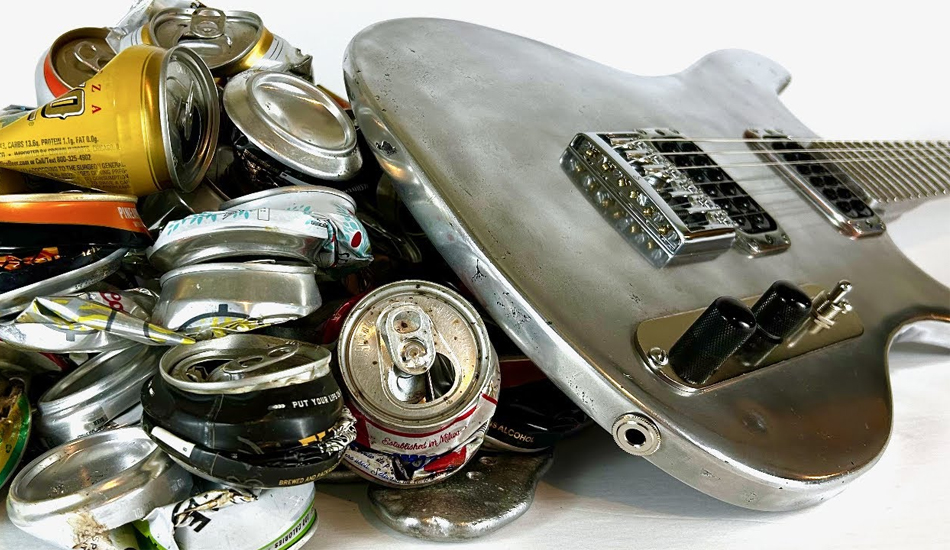
What can you make with 1,000 empty aluminum cans? For YouTuber and luthier Burls Art, the answer is simple: a fully playable electric guitar.
Known for building guitars from unusual materials, Burls Art decided to take on one of his most ambitious projects yet. He collected approximately 1,000 aluminum cans and transformed them into a custom electric guitar. The result is a unique instrument made almost entirely from recycled aluminum.
Burls Art and His Unusual Guitar Projects
Burls Art has become well known for creating guitars from materials that most people would never consider suitable for musical instruments. Since starting his YouTube channel in 2018, he has built guitars from Himalayan rock salt, recycled ocean plastic, newspapers, and other unusual materials.
His aluminum guitar project took the idea even further. According to the video, Burls Art and his friends spent more than a year collecting cans from barbecues, dinners, camping trips, and other activities. The next challenge was turning all that aluminum into usable material.
Building a Furnace to Melt 1,000 Aluminum Cans
Before he could build the guitar, Burls Art needed a furnace capable of melting aluminum. He spent approximately three months researching, designing, and building the equipment required for the project.
He converted an old barrel smoker into the main furnace body. He then added insulation, fire clay, refractory cement, and a propane burner. The project involved extremely high temperatures. The aluminum could reach more than 1,800°F, making safety one of the most important parts of the process.
Burls Art also explained why the cans had to remain completely dry. Even a small amount of moisture can react violently with molten metal. Because of this, he carefully roasted the cans before placing them into the furnace.
From 1,000 Cans to 18.6 Pounds of Aluminum
The project involved approximately 38 pounds of aluminum cans. However, not all of that material became usable aluminum.
During the melting process, part of the cans oxidized and became slag. After several melting cycles, Burls Art recovered approximately 18.6 pounds of usable aluminum.
He poured the molten aluminum into molds to create several aluminum bars. Those bars would eventually become the guitar’s neck and body.

Casting the Aluminum Guitar Neck
Burls Art started with the guitar neck because it required less aluminum than the body. First, he created an exact wooden replica of the neck. He then used that replica as a plug for a Petrobond sand mold.
The Petrobond material allowed him to create a detailed mold around the wooden shape. He also added risers and a pouring channel. These features helped the molten aluminum fill the mold as the metal cooled and contracted.
The first casting worked surprisingly well. The aluminum neck came out with very little visible shrinkage, showing that the risers had done their job.
Cutting Frets Into an Aluminum Neck
Working with an aluminum neck created another challenge. Burls Art could not use his normal table-saw setup for cutting fret slots. Instead, he manually marked the fret positions and used a small hacksaw.
He guided the blade with a piece of aluminum angle iron to keep every cut in the correct position. Unlike a traditional wooden guitar neck, the aluminum neck did not require a truss rod.
Fretting the neck was also more difficult. The metal required considerably more force to seat the frets properly. Several fret ends needed additional attention before the neck was ready.
Casting the Aluminum Guitar Body
After completing the neck, Burls Art began working on the guitar body. He deliberately made the body very thin. This helped reduce both the weight of the finished guitar and the amount of aluminum required.
The body also included a front control cavity inspired by a Telecaster-style design. The first body casting did not go according to plan. Some of the cavities failed to release correctly from the mold. Burls Art then redesigned the mold so that it could split into two sections. This allowed him to pack the sand more effectively and remove the casting more easily.
Learning From Mistakes
The second attempt produced a much better aluminum body, but it still contained several defects. One cavity had a large hole, while other areas showed small voids along the edges. Burls Art adjusted the design again.
He added additional risers above the problematic areas to help the molten aluminum reach the thinner sections of the mold before cooling. The next casting became his best result.
It still contained a small hole and one visible void, but Burls Art decided the body was good enough to finish. Rather than hiding the mistakes, he included them in the video.
That approach is one of the most interesting parts of the project. The process shows that guitar building is often about solving problems rather than achieving perfection on the first attempt.
Putting the Aluminum Guitar Together
Once the casting work was complete, Burls Art moved on to the finishing stage. He cleaned and polished the aluminum before installing the remaining guitar components. The final instrument used a Stratocaster-style body and neck, along with two humbucking pickups.
After months of work, the guitar was finally ready to play. The completed instrument weighed approximately 12.3 pounds. That makes it considerably heavier than many traditional electric guitars.
What Does a Guitar Made From Aluminum Sound Like?
The most important question remained: how does it sound? After spending around three months building the instrument, Burls Art finally plugged it in and demonstrated the finished guitar.
The result is a fully functional electric guitar with a distinctive appearance and character. The polished aluminum also creates an unusual visual effect. As Burls Art points out, the surface easily shows fingerprints and marks.
But that is part of the personality of the instrument. This guitar was never intended to look or feel like a conventional electric guitar.
The aluminum guitar represents more than an unusual experiment. It demonstrates how everyday waste can become something creative and functional.
Instead of sending approximately 1,000 discarded cans to a recycling facility or landfill, Burls Art transformed them into a playable musical instrument.
The project also demonstrates the importance of experimentation. The first casting did not work perfectly. The body required several attempts. Even some of the finishing work involved mistakes that had to be repaired.
Yet the final result proves that the idea was possible.
Watch Burls Art Play His Aluminum Can Guitar
Burls Art’s aluminum can guitar is one of the most unusual guitar-building projects we have seen. It combines recycling, metalworking, guitar building, and music into one fascinating experiment.
The full video documents the entire process, from collecting the cans and building the furnace to casting the neck and body, installing the hardware, and finally playing the completed guitar.
Watch the video below and discover how 1,000 aluminum cans became a fully functional electric guitar.
If you enjoy unusual guitars, creative lutherie projects, and experiments that push the boundaries of guitar design, this is definitely a video worth watching.


Facebook Comments