

Many guitarists spend years searching for the perfect tone, faster technique, or more expressive solos. However, according to Mark Knopfler, one of the biggest obstacles to becoming a better guitarist has nothing to do with gear or speed.
Instead, it comes from something much more common: unnecessary tension while playing. During an interview with Total Guitar, the legendary Dire Straits guitarist shared one of the most valuable lessons he has learned throughout his career—a lesson that still influences the way he approaches the guitar today.
Mark Knopfler’s Advice for Every Guitar Player
Even after decades of performing on the world’s biggest stages, Mark Knopfler admitted that he still works on relaxing his fretting hand.
“I’m still learning to relax my left arm when I’m playing. The more you can learn to relax that left arm, the more fluid you’ll be.”
According to Knopfler, tension limits movement and reduces fluidity. Instead of helping you play with more intensity, it actually makes everything more difficult.
He explained that tight muscles eventually slow your playing and can even lead to discomfort or pain after long practice sessions.
The Habit That Even Mark Knopfler Had to Break
Knopfler revealed that he experienced this problem himself while performing some of Dire Straits’ best-known songs. He admitted that he often played “Sultans of Swing” with far more tension than necessary.
Over time, that habit caused pain throughout his forearm, forcing him to rethink his technique. Rather than trying to play harder, he learned that the key was to play more relaxed.
Why Emotion Shouldn’t Mean Tension
Perhaps the most important part of Knopfler’s advice is the connection between emotion and physical movement. He explained that many guitarists unconsciously tighten their hands because they believe it helps them express more feeling.
Instead, he encourages players to separate those two ideas.
“Getting the urgency into the playing gets translated into tension, unfortunately. But you’ve got to stop associating emotion with tension.”
It is a simple sentence, but one that can completely change the way many guitarists approach practice and performance.
A Simple Warm-Up Can Make a Big Difference
Alongside this advice, Knopfler recommended practicing simple warm-up exercises before tackling more demanding songs. Basic finger exercises help loosen the hands, improve coordination, and prepare both hands for longer playing sessions.
Many experienced guitarists use these exercises every day—not because they are difficult, but because they help prevent stiffness and allow the hands to move more naturally.
A Lesson Beyond Technique
Mark Knopfler’s guitar style has always appeared effortless. His famous fingerstyle technique, expressive phrasing, and smooth melodic playing often make difficult passages look surprisingly easy.
Part of that comes from years of experience, but another important part comes from learning how to stay relaxed while playing. His advice reminds us that becoming a better guitarist is not always about practicing faster or learning more notes.
Sometimes, the biggest improvement comes from removing unnecessary tension and allowing your hands to move naturally. For anyone learning the guitar—from complete beginners to experienced players—this may be one of the most valuable lessons Mark Knopfler has ever shared.
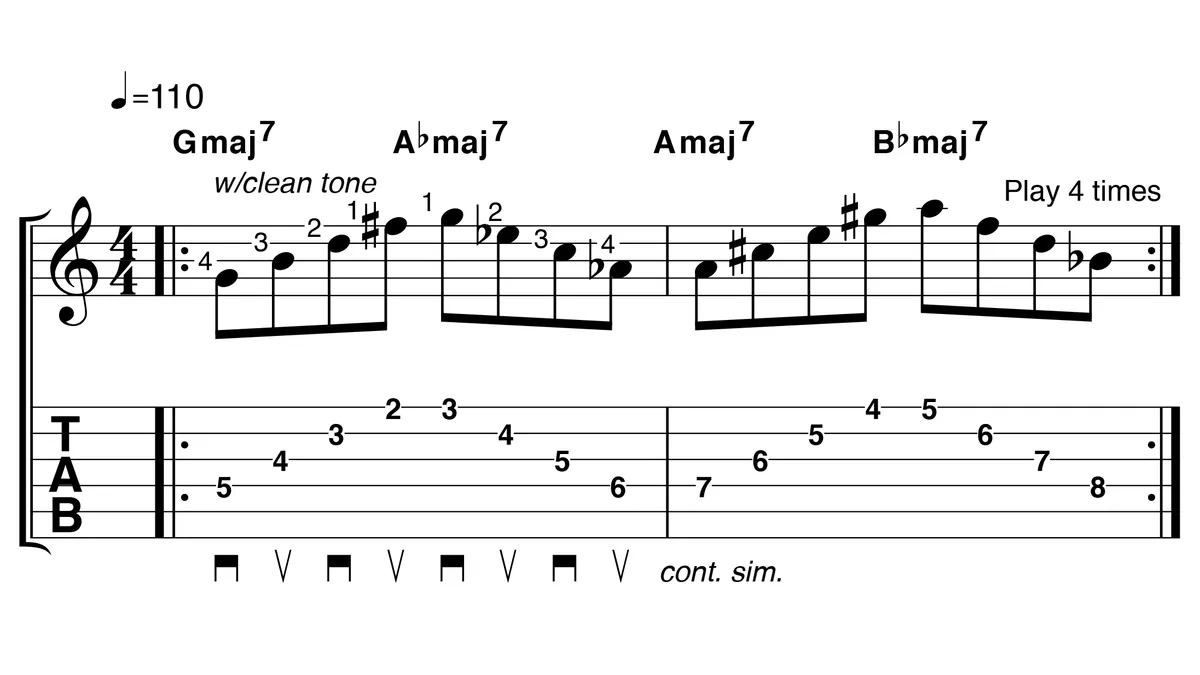
Every Position on the Guitar Tells a Different Story
During the same conversation, Mark Knopfler also explained why the guitar remains one of the most challenging instruments to master.
According to him, the same musical phrase can be played in several different positions on the neck, but each position feels and sounds slightly different.
“The thing about the guitar is that it’s a hard instrument. You have to make your fingers go where they don’t really want to go.”
Knopfler believes that learning the guitar is not only about technique. It is also about gradually recognizing shapes, positions, and patterns that become part of your musical vocabulary.
For improvisation, those shapes eventually become second nature, allowing ideas to flow naturally without consciously thinking about every movement.
Why Mark Knopfler Never Wants His Songs to Become Cabaret
Knopfler also shared a humorous story involving his wife, Kitty Aldridge, while talking about performing “Brothers in Arms.”
After one concert, he told her that he felt the song had not worked particularly well and even wondered if he should stop playing it live.
Kitty asked him one simple question:
“Did you play the twiddly bits?”
When Mark admitted that he had not, her response immediately solved the mystery:
“Well, that’s the problem then.”
The story illustrates something important about Knopfler’s approach to live performance. Although he has played these songs for decades, he believes every performance should preserve the character that made people fall in love with them in the first place.
As he explained:
“I’ve got to try and keep something in them that is the song, because they’re landmarks for people. They’re milestones in their lives.”
For Knopfler, songs such as “Brothers in Arms,” “Sultans of Swing,” and “Romeo and Juliet” are no longer just his own compositions. They have become part of other people’s memories, and he feels a responsibility to perform them with the same emotion and identity that listeners remember.


Facebook Comments