
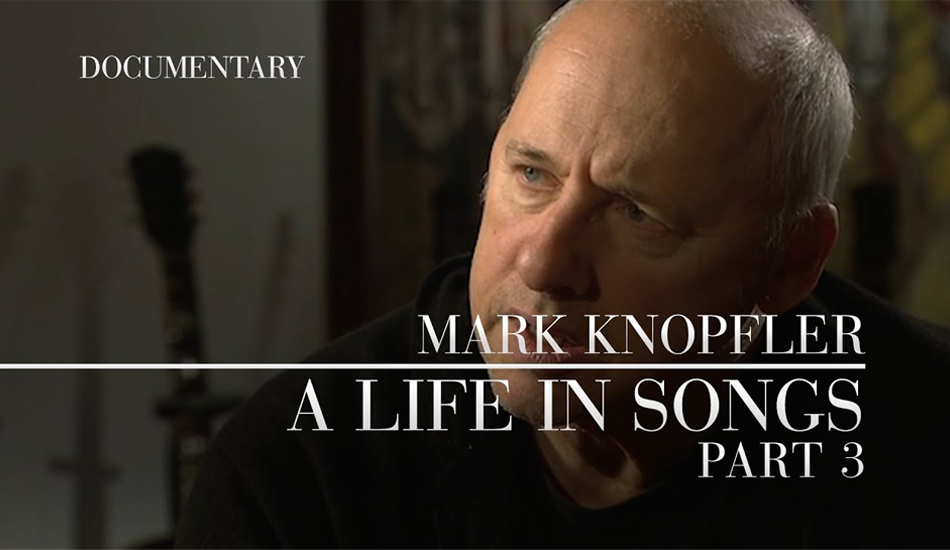
The story of Mark Knopfler and Dire Straits reaches a completely different level in the third part of the “A life in Songs” documentary.
After the early years of journalism, songwriting, and the formation of Dire Straits, Knopfler suddenly found himself at the center of one of the biggest success stories in modern music.
The documentary, originally produced in 2011 for the deluxe edition of Mark Knopfler’s seventh solo album, Privateering, looks back at the extraordinary period surrounding Brothers in Arms, the songs that defined the band’s global success, and the personal cost of becoming one of the biggest bands in the world.
The official part three of this documentary was published on YouTube on September 15, 2017.
Watch Mark Knopfler – “A Life in Songs” Part Three
The third part of “A Life in Songs” is essential viewing for anyone interested in the history of Dire Straits.
It explores the creation of Brothers in Arms, the stories behind “Brothers in Arms” and “Money for Nothing,” the rise of MTV, the band’s extraordinary world tour, and the personal pressure that came with global fame.
Most importantly, the documentary shows Mark Knopfler looking back on these events from a different stage of his life. For fans, it provides a rare opportunity to hear the songwriter himself explain how some of Dire Straits’ most important songs came together—and what it felt like when those songs suddenly became part of the lives of millions of people.
Watch the official documentary below and continue the story of Mark Knopfler’s “A Life in Songs.”
“Brothers in Arms” – The Album That Changed Everything
Released in 1985, Brothers in Arms transformed Dire Straits from a hugely successful rock band into a global phenomenon. Knopfler explains that he never approached the album with the expectation that it would become such a massive success.
For him, recording Brothers in Arms was simply another stage in his development as a songwriter. He was focused on writing and recording the songs rather than predicting how many people would eventually hear them.
The album benefited from several factors, including the growing popularity of the compact disc and the success of Dire Straits songs in the United States.
Knopfler also points out that “So Far Away” was reportedly among the earliest CD singles, highlighting the technological changes taking place in the music industry at the time.
The combination of new technology, powerful songs, and a rapidly expanding audience helped Brothers in Arms become one of the defining albums of the 1980s.
The Story Behind “Brothers in Arms”
One of the most fascinating sections of the documentary focuses on the album’s title track.
The phrase “Brothers in Arms” first caught Knopfler’s attention after hearing a comment about the Falklands War. His father had remarked on the irony of the Soviet Union supporting Argentina during the conflict, and the phrase stayed with him.
For a songwriter, certain words and ideas can remain in the mind until they eventually find a place in a song. That was exactly what happened with “Brothers in Arms.”
Knopfler also explains that the opening line, “These mist covered mountains,” was inspired by the title of an old Scottish air. The song developed into a meditation on war, mortality, friendship, and the experience of a wounded soldier surrounded by his comrades.
Knopfler had also been influenced by literature, including poems and historical stories he encountered while growing up. The result was one of the most emotional songs in the Dire Straits catalogue.
From Rock Song to Anthem
“Brothers in Arms” eventually took on a life far beyond the original recording. Knopfler recalls hearing how soldiers used the song during military conflicts, including the Gulf War.
In one story, a soldier contacted a radio station and explained that his unit had played the song after the end of a battle. For Knopfler, this was a powerful reminder of what music can become once it leaves the songwriter.
He also reflects on how his songs have been used at weddings and other important moments. The same music can accompany completely different experiences: celebration, remembrance, love, loss, and major moments in people’s lives.
For a songwriter, that connection is one of the most rewarding things music can create.
“Money for Nothing” and the Birth of an MTV Classic
Another major focus of the Part Three documentary is “Money for Nothing.” The song became Dire Straits’ first No. 1 single in the United States, helped by its memorable guitar sound, provocative lyrics, and groundbreaking music video.
Knopfler reveals the unusual story behind the song’s creation. While visiting an appliance store in New York, he noticed that the televisions throughout the store were showing MTV.
A delivery worker was watching the videos and loudly giving his opinions about the musicians appearing on the screens. Knopfler found the man’s comments so entertaining that he decided to write them down.
He went to the counter, asked for a pen and paper, and began recording some of the phrases he had heard. The result became the foundation for one of Dire Straits’ biggest songs.
How Mark Knopfler Created the Guitar Sound
“Money for Nothing” also introduced one of the most recognizable guitar sounds of the 1980s.
Knopfler admits that he had largely forgotten exactly how he created the sound. His approach was simple: experiment with the amplifier until something worked.
The famous riff relies on restraint as much as distortion. Instead of filling the arrangement with endless notes, Knopfler leaves space between the phrases.
The result is a guitar sound that is instantly recognizable within seconds. The song’s iconic video also became closely associated with the rise of MTV and helped turn Dire Straits into one of the defining bands of the decade.
The “Brothers in Arms” Tour – 247 Shows in 100 Cities
The success of the album created an enormous demand for Dire Straits on the road. The Brothers in Arms Tour lasted approximately 12 months, during which the band performed 247 shows in 100 cities.
Among the most remarkable achievements was a record-breaking 30-night run at London’s Wembley Arena.
At this point, Dire Straits had reached a level of popularity that was difficult to comprehend. Knopfler describes a kind of “critical mass” developing around the band. Fans were buying the records, but they also wanted to experience the music live. The concerts became events in themselves.
When Success Became a Burden
Behind the enormous success, however, Knopfler was discovering another side of fame. Suddenly, he was no longer simply a songwriter observing the world around him. People were observing him. That change was difficult to process.
Knopfler describes the experience as a massive strain and reflects on how difficult it can be for young musicians to suddenly find themselves surrounded by enormous attention, money, expectations, and pressure.
He considers himself fortunate to have survived the experience without being completely overwhelmed by it.
His comments reveal a more vulnerable side of the Brothers in Arms era. The success that millions of fans dreamed about also brought pressures that the young Mark Knopfler had never experienced before.
The Price of Becoming a Global Superstar
Part Three of “A Life in Songs” is therefore about much more than the success of Brothers in Arms. It is about what happens when a songwriter’s private world suddenly becomes public.
Knopfler had spent years observing other people. Now he became the person everyone was watching. That reversal changed his relationship with fame and helped shape the way he approached his career in the years that followed.
The documentary offers an unusually honest perspective on this period. Behind the records, awards, sold-out concerts, and enormous audiences was a musician trying to maintain his identity while the world around him was changing at incredible speed.


Facebook Comments